HERITAGE DEXTER BEEF · GRASS-FED & GRASS-FINISHED · PONDER, TEXAS
SALT & IRONCATTLE CO.
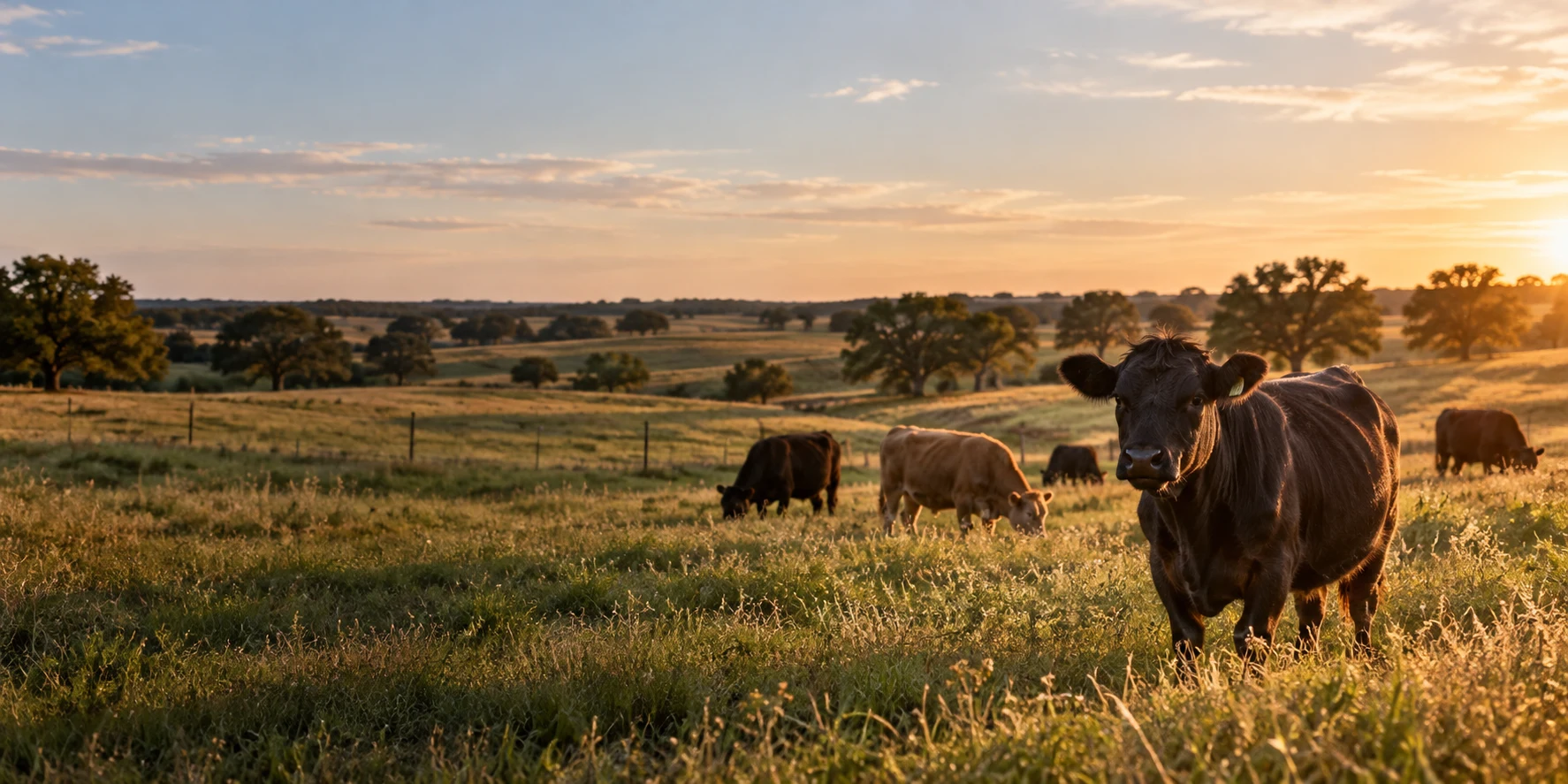
Illustrative scene of Dexter-style cattle grazing at sunset

SALT & IRON CATTLE CO. · PONDER, TEXAS

Good beef starts
with good grass.

We raise grass-fed, grass-finished Dexter beef in Ponder, Texas. That means a lot of our work happens before the cattle ever take a bite.

SALT & IRON CATTLE CO. · PONDER, TXFAMILY RAISED · GRASS FINISHED
Heritage Dexter cattleGrass-fed & grass-finishedRegenerative grazingFamily owned

Before we raise beef,
we grow grass.

To be good cattle ranchers, we believe we have to be good grass farmers first.

That’s the idea behind Salt & Iron Cattle Company. We’re a family business in Ponder, Texas, raising Dexter cattle on grass and finishing them on forage.

So we spend a lot of time thinking about what’s growing under their feet. We plant a mix of forages, work with Dave from Big Little Farm on compost tea applications, and move the cattle so the pasture gets time to come back. Those are the decisions behind the beef we want to put on your table.

Ponder, Texas / Dexter cattle / Family business

WHAT THAT LOOKS LIKE HERE

A closer look
at the pasture.

“Regenerative” can cover a lot of ground. Here are some of the things we actually do.

Read about our grass farming

SOIL BIOLOGY

Dave brings the compost tea.

Several times a year, Dave Phillips of Big Little Farm sprays our pastures with freshly brewed aerated compost tea. We use it as part of our effort to support the soil’s living community.

Our compost tea program ↗

DIVERSE FORAGE

We plant a mix, with a job for each part.

We plant forage polycultures to feed the cattle and contribute to the soil. Native species, where they fit, are part of our goal for a more diverse, prairie-style pasture.

How our forage mixes work ↗

ROTATIONAL PADDOCKS

Our cattle wear solar-powered collars.

Monil virtual fencing makes changing paddocks more practical for us. We can adjust grazing boundaries in the app while deciding pasture moves by forage and recovery.

Why we use virtual fencing ↗
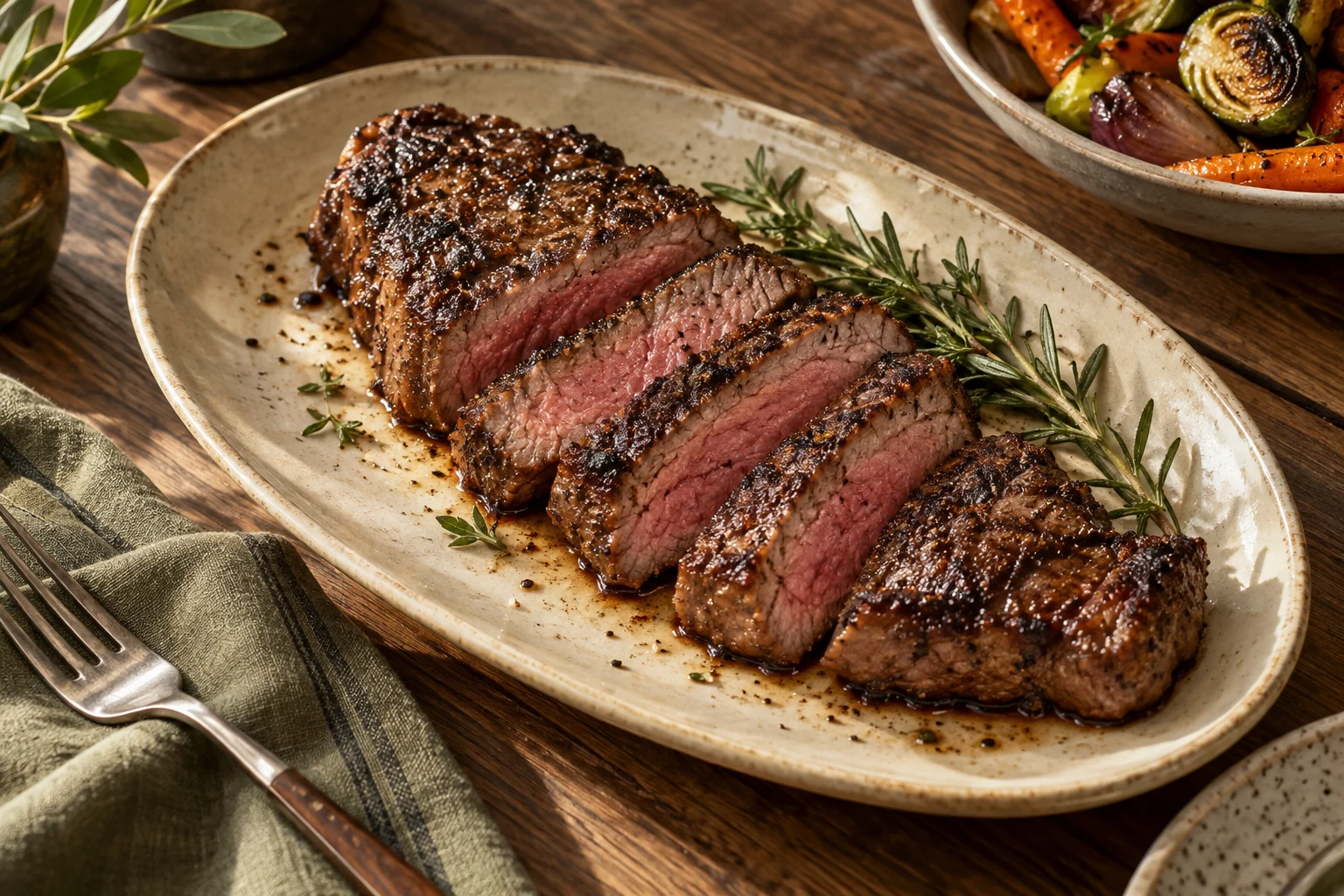
Illustrative serving scene of sliced steak on a cream platter beside linen and vegetables
Illustrative serving scene · AI generated

WHY THE WORK MATTERS

You’re feeding
people you love.

We know that buying beef for your family is a decision you put some thought into. You want it to taste good. You want to know how the cattle were raised. And you want a straight answer when you ask a question.

That’s what we want Salt & Iron to offer: Dexter beef we’ve taken care in raising, and a clear explanation of the work behind it.

Professionally processed, USDA-inspected. All of our beef is professionally processed at a USDA-inspected facility.

Why we chose Dexter cattle

HOW WE RAISE OUR BEEF

Here’s what
you can count on.

These are the practices we follow in our cattle operation.

THE DIET

Grass-fed.
Grass-finished.

Our cattle eat a forage-based diet through finishing. We don’t switch them to a grain-finishing program.

THE PASTURE

No artificial fertilizer.
No herbicide. No insecticide.

We don’t apply these to our pastures. We work on fertility through our forage mixes, grazing management, and compost tea program.

THE GRAZING

Move the herd.
Give the grass a rest.

Our Monil collars let us adjust paddocks more easily. We make the grazing decisions by looking at forage, weather, and recovery.

THE CATTLE

Dexter cattle.
Raised without vaccines.

We chose a hardy heritage breed for our grass-based operation. We raise our cattle without vaccines.

MINERAL ACCESS

18 free-choice minerals.
Always available.

Our cattle have continuous access to 18 different free-choice mineral options alongside their forage-based diet.

PROCESSING

Professionally processed.
USDA-inspected.

All our beef is professionally processed at a USDA-inspected facility.

AI-generated illustration of a black Dexter-style cow on pasture
THE HERITAGE BEHIND OUR BEEFDexter cattle · North Texas raised
Illustrative ranch imagery · AI generated

WHY DEXTERS

We chose Dexters
for a reason.

We wanted cattle that could make good use of forage, handle the demands of our land, and produce beef we’d be proud to serve. Dexters made sense to us.

01

We care about tenderness and flavor.

Tenderness and rich beef flavor are two reasons we chose the breed. How we raise the cattle matters to us, and so does how the beef eats.

02

They make good use of forage.

Dexters are known for being thrifty cattle. Their compact frame is a good fit for the kind of pasture-based operation we want to run.

03

They’re hardy cattle.

Their hardiness is another reason we like working with them in North Texas. Good forage, water, shade, and daily care still matter, whatever the breed.

Learn about the heritage of Dexter cattle

ROTATIONAL GRAZING

Knowing when
to move.
And when to wait.

A grazed pasture needs time to grow again. We use our Monil collars to keep cattle in their rotational paddocks and move them consistently, while other areas rest.

The collars make changing a boundary easier. The grass tells us when to change it.

EXPLORE THE GRAZING CYCLEThree connected stages

Graze one area.

We keep the herd in a rotational paddock while other areas rest. The forage and ground conditions help us decide when to move.

An illustration of rotational grazing. Actual pasture moves depend on forage, weather, and recovery.

Salt and Iron Cattle Company emblem with horns and an anvil, Ponder Texas

OUR FAMILY BUSINESS

We want you to
know who raised it.

Salt & Iron Cattle Co. is our family’s cattle business in Ponder, Texas.

We’re putting our name on this beef. So the details matter to us: what we seed, what we spray, where the cattle graze, and how long we give the pasture to recover.

We’ll tell you what we do and why. Some of it is simple. Some of it takes learning and adjusting as we go. We think you deserve that kind of honesty from the people raising your food.

Thanks for taking an interest in what we’re building.SALT & IRON CATTLE CO.

THE SALT & IRON TABLE

Pull up
a chair.

If you care about how your beef was raised, you’re in the right place. We’d like you to get to know our cattle operation well enough to understand the choices we make—and to keep asking questions.

Start with the grass. That’s where we do.

Take a closer look at our pastures

QUESTIONS WE’RE GLAD TO ANSWER

A few more
details.

About our cattle and our beef.

Read all our beef questions ↗
Is your beef grass-fed and grass-finished?

Yes. Our cattle eat a forage-based diet through finishing. We don’t grain-finish our beef.

Do your cattle have access to minerals?

Yes. We provide continuous access to 18 different free-choice mineral options in addition to their forage-based diet.

Where is your beef processed?

All our beef is professionally processed at a USDA-inspected facility.